
HOW TO REMOVE MOULD AND BLACK PATCHES FROM WALLS BEFORE REPAINTING IN PORT HARCOURT
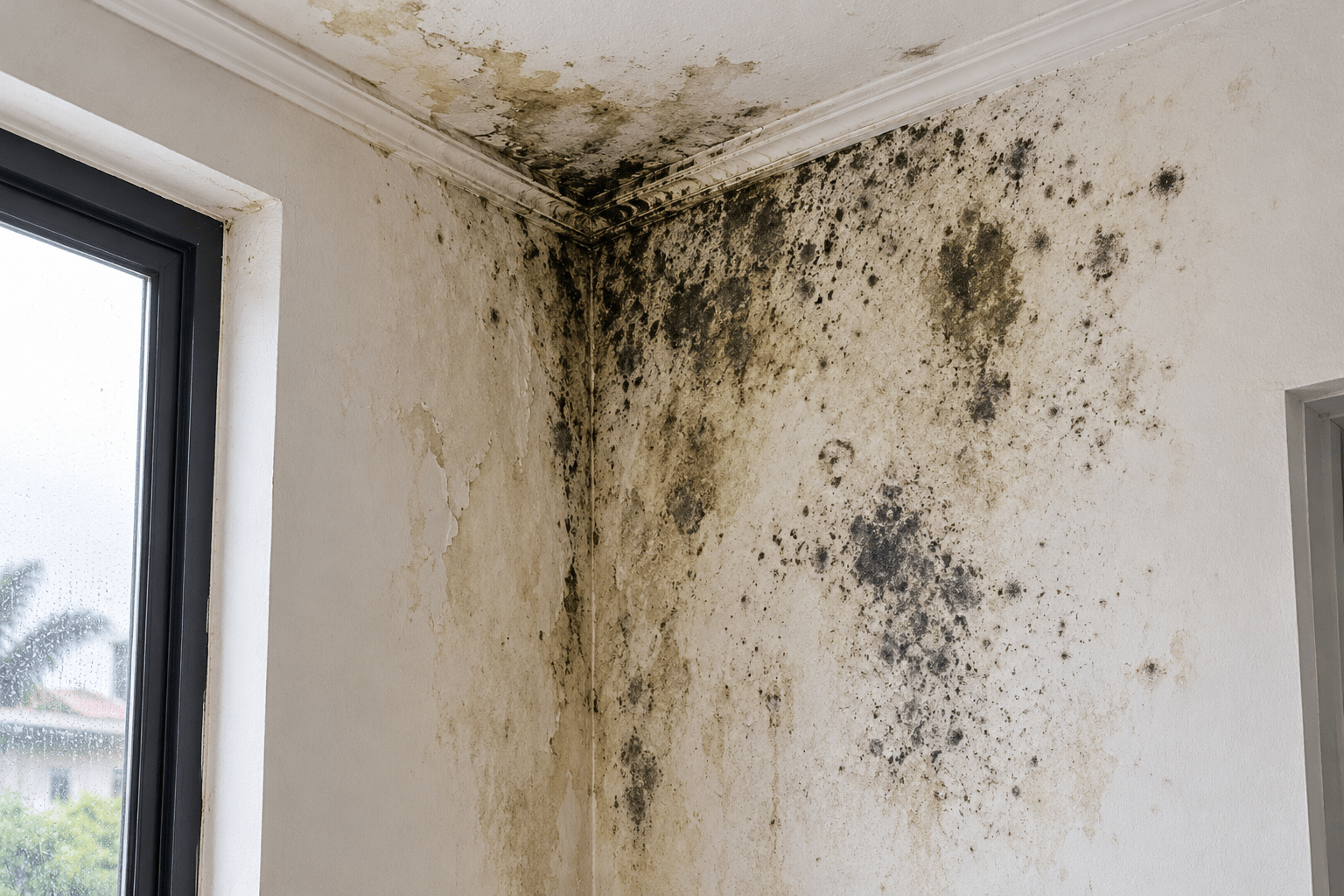
Have you noticed black patches on your walls, mould growing in the corners of your ceiling, or paint peeling off just a few months after repainting? If you live in Port Harcourt, you may already be familiar with these problems.
The combination of high humidity and frequent rainfall in Port Harcourt can make it difficult to keep walls dry, especially in bathrooms, kitchens, poorly ventilated rooms and areas exposed to rainwater.
Unfortunately, applying a fresh coat of paint over mould will not make the problem disappear permanently. The patches may return, and the new paint may begin to peel or bubble.
Before spending money on repainting, it is important to understand what is causing the problem and how to prepare the affected surface properly.
At Merlux Painting Services, we believe that a lasting paint finish starts with proper surface preparation. Here is what you need to know about removing mould from walls before repainting.
WHY DOES MOULD GROW ON WALLS?:
Mould develops in damp conditions where moisture remains for an extended period. Common causes include leaking roofs, faulty plumbing, blocked gutters, cracks that allow rainwater into the building and poor ventilation.
You may first notice small black or green patches in a bathroom corner, around a window or on the ceiling. Over time, the affected area can spread and leave your walls looking dirty and neglected.
Identifying the cause early can help you avoid repeated cleaning and unnecessary repainting costs.
WHAT YOU NEED TO REMOVE MOULD
Before getting started, gather the following materials:
1. Rubber gloves, safety goggles and a suitable face mask.
2. A bucket of water and a soft brush or sponge.
3. A mould removal product suitable for the affected surface.
4. Clean cloths and a scraper for removing loose paint.
5. Sandpaper for preparing damaged areas after they have dried.
6. A suitable primer and quality paint for the final finish.
Always follow the manufacturer's instructions when using cleaning products. Never mix bleach with other cleaning chemicals, as this can release dangerous gases.
HOW TO REMOVE MOULD FROM YOUR WALLS BEFORE PAINTING
1. FIND AND FIX THE SOURCE OF MOISTURE:
Before cleaning the wall, check for leaking pipes, roof leaks, blocked gutters and cracks that allow rainwater into the building. If poor ventilation is contributing to the problem, find ways to improve airflow.
Treating the cause is essential. Otherwise, the mould may return even after the wall has been repainted.
2. PROTECT YOURSELF AND THE SURROUNDING AREA:
Open windows and doors where possible to improve ventilation. Wear appropriate protective equipment and cover nearby furniture and flooring to protect them from cleaning products and debris.
Keep children and other occupants away from the affected area while cleaning. If the mould covers a large area, seek professional assistance rather than attempting to remove it yourself.
3. CLEAN THE AFFECTED SURFACE PROPERLY:
Use a mould removal product designed for the type of wall you are treating. Apply it according to the manufacturer's instructions and clean the surface as directed.
Avoid dry brushing mould, as this can release spores into the air. Do not scrub aggressively, as this may damage the paint or plaster.
Never mix different cleaning products, even if one treatment does not appear to work.
4. REMOVE LOOSE AND DAMAGED PAINT:
After treating the affected area, inspect the paintwork for bubbling, flaking or peeling.
Use a scraper to remove loose paint and prepare the surface for repainting. Any sanding should be done only after the area has been treated and dried, using suitable dust protection.
If the plaster underneath is soft, crumbling or badly damaged, it may need repair before painting can begin.
5. ALLOW THE WALL TO DRY COMPLETELY:
Give the wall enough time to dry before proceeding. Drying may take longer during Port Harcourt's rainy season.
Do not rush this stage. If the wall remains damp, investigate further before applying primer or paint.
6. APPLY THE RIGHT PRIMER AND PAINT:
Once the wall is completely dry and properly prepared, apply a suitable mould-resistant primer where recommended by the manufacturer.
Follow with quality paint suited to the location. For interior walls, choose a product appropriate for the room and its conditions. For exterior walls, use exterior-grade paint designed to withstand local weather.
Proper surface preparation and suitable products will help you achieve a neat, durable finish.
WHEN SHOULD YOU CALL A PROFESSIONAL?
Some mould problems require more than routine cleaning.
Consider a professional inspection if the mould covers a large area, keeps returning after treatment, produces a persistent musty smell or appears alongside soft, crumbling plaster.
You should also seek assistance if the affected area is on a high ceiling or another difficult-to-reach surface.
A professional can assess the condition of the wall, identify possible underlying problems and recommend the appropriate treatment before repainting.
HOW TO PREVENT MOULD FROM RETURNING:
A few simple habits can help keep your walls in better condition.
1. Keep bathrooms and kitchens well ventilated, especially after bathing or cooking.
2. Repair leaking pipes and roofs as soon as possible.
3. Clear gutters and downpipes regularly.
4. Wipe away water splashes and condensation promptly.
5. Leave a small gap between furniture and exterior walls to allow air to circulate.
6. Inspect damp-prone corners, ceilings and exterior walls regularly, particularly during the rainy season.
These measures can help reduce damp conditions and keep your paintwork looking fresh for longer.
Mould on your walls is more than a cosmetic problem. Painting over the patches without treating the affected surface can leave you facing the same issue again.
The better approach is to identify the cause, clean the affected area properly, allow the wall to dry and use suitable products before repainting.
At Merlux Painting Services, we understand that good painting goes beyond choosing beautiful colours. Proper preparation is what helps a paint finish look good and last longer.
If you are dealing with mould, damp patches or peeling paint in your home, office or commercial property, visit us at 27B NTA Road, Port Harcourt, Rivers State, for professional painting assistance.